
ADHD and Mental Health: When Potential Feels Out of Reach
November 10, 2026

ADHD is often talked about as a focus problem, but for many people, the harder part is what it does to mood, confidence and hope. Missed deadlines, forgotten tasks and constant restarts can slowly add up to depression and low self-esteem, especially for people who know they are capable of more. Understanding the link between ADHD and mental health can help individuals and families recognize when it is time to get support.
How Does ADHD Affect Mental Health?
ADHD affects mental health when its symptoms repeatedly get in the way of school, work, relationships and daily responsibilities. Over time, that gap between what a person wants to do and what they can do can lead to frustration, discouragement, and depression.
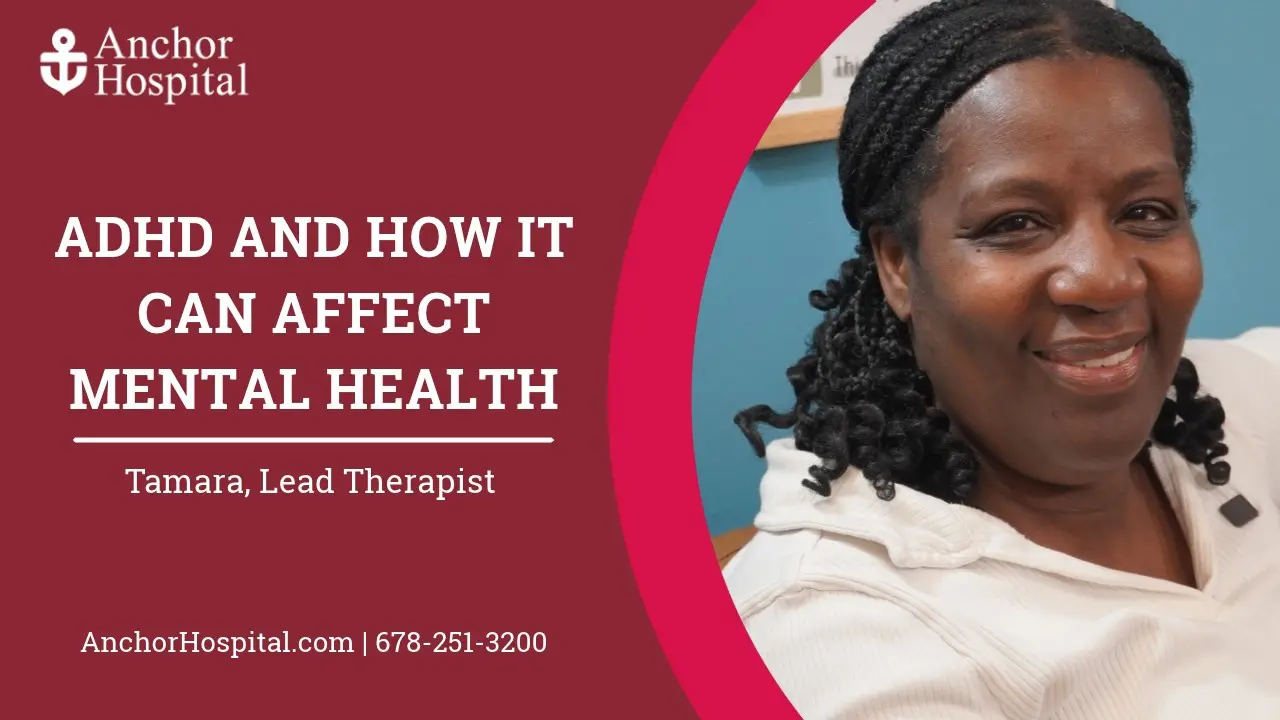
Tamara, lead therapist at Branches College Park, a service of Anchor Hospital, sees this pattern often.
“You have people that are talented, they’re smart, they have a lot of potential, but because of some of the symptoms that come with ADHD, they’re not able to live up to that potential, and they are aware of it.”
That awareness is what makes ADHD so emotionally heavy. Many people with ADHD are not struggling because they lack ability. They are struggling because their brain works differently, and the systems around them were not built with that in mind.
ADHD, Depression and Self-Esteem
When effort does not match results, people often start to blame themselves. Tamara describes the questions many of her clients carry:
“I’m not where most of my peers are. Why can’t I get to where most of my peers are? Why can’t I elevate to the level of potential that I have?”
These thoughts can quietly shape how a person sees themselves. Common emotional challenges linked to ADHD include:
- Depression: Ongoing setbacks can lead to sadness, low motivation and a sense that things will never improve.
- Low self-esteem: Repeated criticism, from others or from within, can make a person feel lazy, broken or “not enough.”
- Comparison: Watching peers move ahead in school, careers or life milestones can deepen feelings of failure.
- Anxiety: Worry about forgetting something, falling behind or disappointing others can feel constant.
- Frustration and shame: Knowing what needs to be done but struggling to start or finish can be exhausting.
Signs ADHD May Be Affecting Emotional Well-Being
It can be hard to tell where ADHD ends and depression or anxiety begins. These signs may mean it is time to reach out for help:
- Feeling hopeless about school, work or the future
- Frequent negative self-talk, such as “I always mess things up”
- Pulling away from friends, family or activities
- Ongoing trouble keeping up with responsibilities despite real effort
- Changes in sleep, appetite or energy
- Irritability or emotional outbursts that feel hard to control
- Using alcohol or other substances to cope
- Thoughts of self-harm or suicide
If there is immediate danger or thoughts of suicide, seek emergency help right away.
Organization Built for the ADHD Brain
One of the most effective tools Tamara uses with clients is also one of the most practical: organization. Not generic advice to “get organized,” but systems designed around how someone with ADHD actually thinks.
“Let’s organize in a way that makes sense to someone with ADHD.”
Supportive strategies may include:
- Break big tasks into small steps. Smaller, clear actions are easier to start and finish.
- Use visual tools. Calendars, checklists, whiteboards and phone reminders keep tasks in sight.
- Build simple routines. Consistent daily patterns reduce the mental load of deciding what comes next.
- Make space for what works. If someone focuses better with music, movement or short work sessions, build around that.
- Celebrate progress. Noticing small wins helps rebuild confidence over time.
When these systems start working, the change goes beyond productivity. Tamara has seen it firsthand:
“We see the self-esteem go up. We see a level of hopefulness that they may never have had before.”
You Can Be Successful With ADHD
Perhaps the most important shift happens in how people see themselves. With the right support, many clients come to a powerful realization: having a mental health condition does not define their future. As Tamara puts it, they realize they can become successful in spite of it.
Treatment for ADHD and its emotional effects may include individual therapy, group therapy, skill-building, family involvement and medication evaluation when appropriate. The right level of care depends on how much symptoms are affecting daily life.
Outpatient Mental Health Support in Southwest Atlanta
ADHD can make life feel harder than it should, but you do not have to figure it out alone. At Branches College Park, a service of Anchor Hospital, our outpatient team helps adults and teens in Southwest Atlanta build practical skills, manage depression and anxiety and rediscover confidence in what they can achieve.
“We are here to help. We understand, we support, we encourage, we do not judge. The biggest investment you can ever make is investing in yourself.”
Learn more about outpatient treatment at Branches College Park, or call 678-251-3200 to schedule a level-of-care assessment.